Sell Electrical Transformers in Minnesota — Planning Guide
This page is a practical planning guide for sellers preparing to sell new, used, or surplus electrical transformers in Minnesota. It explains the information buyers typically need, how equipment is qualified, site access and loading considerations, long-distance freight basics, ownership and timing issues, and what condition problems mean for resale. We operate as a nationwide buyer and can review equipment remotely; physical work such as disconnection, testing, rigging, fluid handling, and transport must be performed by qualified contractors under applicable requirements.
Evaluation starts with facts
Share the manufacturer, rating, voltage, phase, condition, quantity, and location before discussing value or pickup.
Start with clear documentation
Buyers begin evaluations with documentation that proves identity and condition. A readable nameplate photo is the most valuable single item because it usually lists manufacturer, serial and model numbers, kVA or MVA rating, primary and secondary voltages, phase, and frequency. Supplement a nameplate with purchase invoices, maintenance logs, removal date, quantity, and any factory or field test reports. Also note where each unit is physically located on site and whether it remains installed or has already been removed.
bullets
- High-resolution photo of the full nameplate and any adjacent rating labels
- Manufacturer, model, and serial numbers; kVA/MVA rating; voltage and phase
- Purchase invoice or original PO, last-in-service date, and quantity
- Available test reports (turns-ratio, insulation resistance, power-factor, DGA)
- Current storage location and access notes (indoor, outdoor, on pad)
How buyers qualify transformers
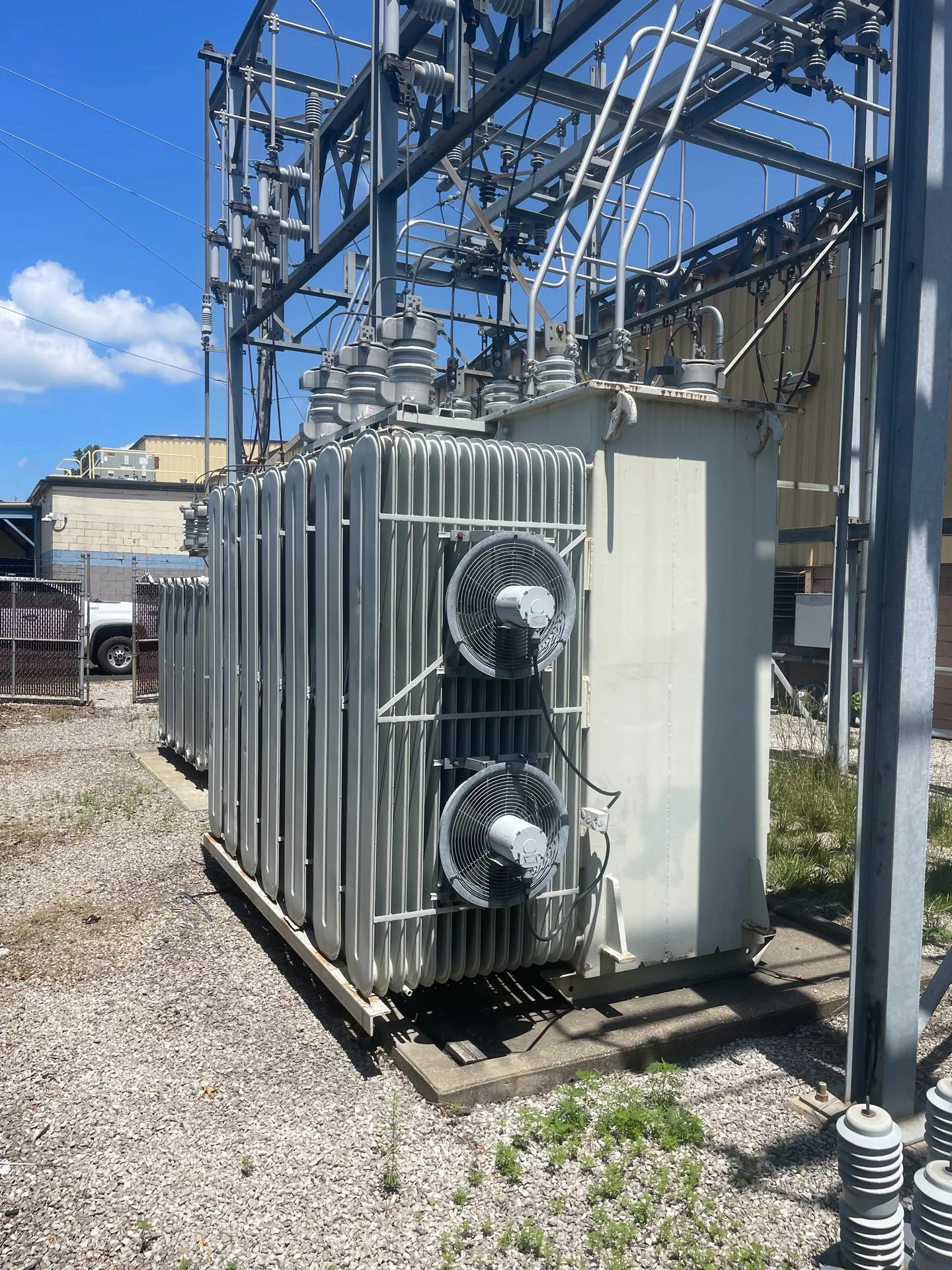
Buyers consider type and specifications first: dry-type vs. oil-filled, pad-mounted vs. indoor, step-up/step-down, distribution vs. power, isolation or autotransformer. Age and physical condition influence interest, but documented electrical tests (turns-ratio, insulation resistance, power factor, or dissolved-gas analysis for larger oil-filled units) often carry more weight. Consistency between nameplate data and physical features is important; disclose known repairs, retrofits, or missing identification rather than guessing details.
bullets
- Transformer type and enclosure (dry, oil-filled, pad-mounted, vault, etc.)
- Electrical ratings (kVA/MVA, voltages, phase, frequency, impedance)
- Service history and any known faults or internal repairs
- Recent test reports—if available—are especially helpful
Site access, rigging and loading information to provide
Accurate site-access details reduce surprises during removal. Describe whether units are still installed and energized, on a concrete pad, in an electrical room, or stacked in a yard. Buyers and their contractors will need gate width, roadway/turning clearance, overhead obstacles, ground-bearing capacity, lifting points, and whether a forklift or crane is required. Any required permits, confined-space issues, or staged traffic control should be flagged early. All electrical disconnection and rigging must be done by licensed professionals under applicable codes.
bullets
- Indoor or outdoor location and distance to legal public roadway
- Gate and doorway widths, overhead clearances, and approach geometry
- Ground bearing or pad condition and proximity to power or utilities
- Available lifting points, skid condition, and whether forklift/crane is needed
- Any site permits, traffic control, or building access limitations
Long-distance freight and logistics
If the buyer or end market is out-of-state, freight becomes a key factor in feasibility. Provide gross weights, dimensions, and whether the unit can move on a skid or needs special crating. Units containing insulating fluids may require draining, manifests, or regulated hazmat transport; buyers will factor handling into any interest. Seasonal transport considerations, such as winter road conditions, can affect scheduling in Minnesota—communicate any date windows or restrictions up front to get realistic logistics options.
bullets
- Weight and external dimensions (height, width, length) and axle or skid details
- Whether the unit must be shipped assembled or can be partially disassembled
- Fluid status: drained, full, or unknown (buyers may require professional draining)
- Preferred pickup window and any seasonal availability constraints
Ownership records, liens and scheduling constraints
Confirm you have authority to sell and disclose any encumbrances or lienholders. Buyers will request documents proving transferability or ask for a bill of sale at closing. Provide the earliest removal date and any blackout periods when the asset must remain in service. Short-notice removals often raise labor and routing costs; conversely, giving advance notice increases options. Be explicit about staging, whether items must remain on site until other work completes, and whether temporary storage is available.
bullets
- Proof of ownership or authorization to sell (invoice, bill of sale, PO)
- Any existing liens, leases, or sale restrictions
- Earliest pickup date and any required hold times
- Onsite staging or storage availability before transport
Condition issues, likely outcomes and next steps
Not every transformer will receive a resale offer. Missing nameplates, severe corrosion, internal contamination, fire damage, undocumented repairs, or failed tests reduce marketability. When reuse isn’t practical, alternatives include selling for parts, consigning to auction or a broker, or arranging responsible recycling through a licensed processor. A buyer may outline those options during review. Final disposition and any environmental handling must be executed by qualified specialists in accordance with applicable regulations.
bullets
- Common deal-breakers: missing ID, extensive rust, oil contamination, internal arcing
- If resale is declined, options include parts sale, auction, brokered sale, or recycling
- Expect buyers to ask for third-party inspection or testing before a firm offer
- All fluid handling, decommissioning, and disposal must follow regulations
Common questions
Practical answers before you call
One clear next step