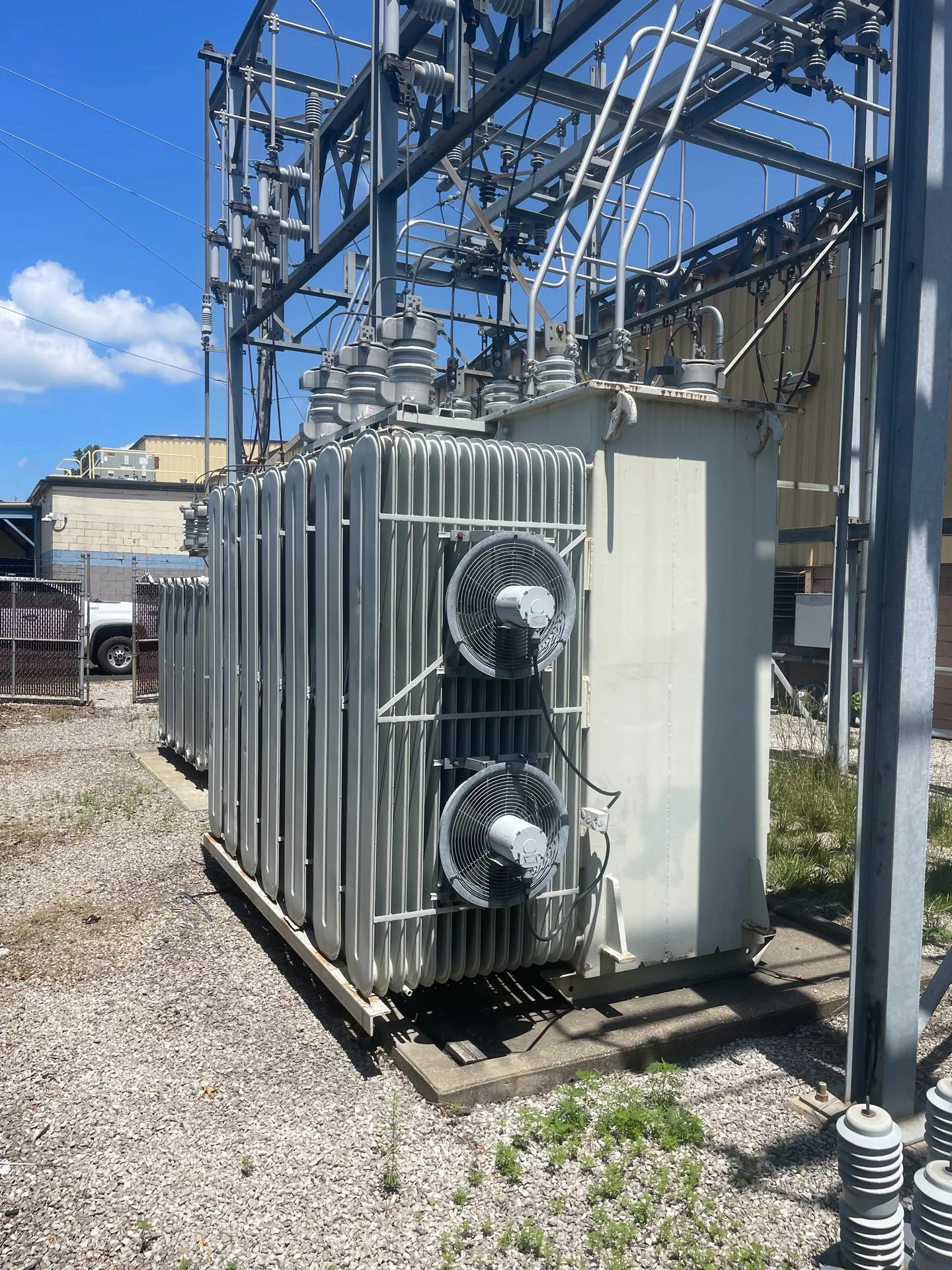
Sell Electrical Transformers in West Virginia — Planning Guide
This statewide planning guide helps contractors, facility managers, utilities, demolition teams, and equipment resellers prepare transformers for sale. It focuses on the practical information most buyers need: nameplate and ownership records, condition and test history, quantity, physical access and rigging, and long-distance freight considerations. We are a nationwide buyer and can review equipment from anywhere in the U.S.; this page explains what to assemble and the realistic steps and timelines that influence whether a unit can be re-marketed or needs another disposition.
Evaluation starts with facts
Share the manufacturer, rating, voltage, phase, condition, quantity, and location before discussing value or pickup.
Gather essential documentation and nameplate data first
The single most useful step is assembling available documentation and clear nameplate information. Buyers rely on manufacturer and serial numbers, kVA or MVA rating, primary and secondary voltages, phase, frequency, cooling or design type, and impedance or tap settings. Proof of ownership, purchase or removal records, and any recent service or test reports (e.g., turns ratio, insulation resistance, oil dielectric tests) reduce uncertainty and speed review. If records are incomplete, provide what you have and note gaps clearly.
bullets
- Nameplate items: manufacturer, model, serial, kVA/MVA, voltages, phase, frequency
- Documentation: purchase invoice, removal date, ownership transfer, maintenance logs
- Test records: last dielectric, turns-ratio, DGA or insulation resistance reports if available
Document condition and qualification details
Condition drives most valuation decisions. Note external damage, corrosion, evidence of oil leaks, missing bushings or covers, and any signs of overheating or past repairs. For dry-type units, document winding condition and enclosure integrity. Include year of manufacture and approximate service life where known. If you have run-hours, load history, or outage reports, mention them. Honest, specific descriptions reduce follow-up and allow buyers to determine whether the unit is a candidate for reuse, parts, or scrap.
bullets
- Record visible issues: dents, rust, paint loss, oil stains, compromised gaskets
- Note internal evidence if inspected by qualified personnel: moisture, contamination, core problems
- If available, include previous repair descriptions and dates
Plan site access, ownership transfer, and removal steps
Location and site access often determine whether a sale is practical. Provide the exact location, property type, and any access constraints such as narrow roads, low clearances, gates, or restricted hours. Confirm who controls removal authorization and whether utility coordination or permit approvals are required. De-energization, disconnection, and testing must be handled by qualified staff under applicable regulations—buyers typically rely on sellers to arrange or confirm those actions before pickup.
bullets
- Access checklist: gate codes, clearances, staging area for crane or trailer, nearest public road
- Authorization: owner approval, utility notification, and required permits
- Safety: ensure qualified personnel perform de-energization and isolation
Evaluate rigging, loading and on-site handling
Rigging and loading requirements depend on transformer weight, center of gravity, and enclosure type. Pad-mounted and large oil-filled units may require cranes or heavy lifts and should be lifted only at manufacturer-recommended points. Secure tarping or containment may be needed for oil-filled units during handling. Buyers need to know lifting points, approximate weight, and whether there is a preferred sequence when multiple units are being removed from the same site. Always engage qualified riggers and follow legal and environmental rules.
bullets
- Provide approximate weight, lifting points, and whether the unit is free-standing or bolted to pads
- State if fluid draining or containment will be required for oil-filled units
- Note whether a crane, forklift, or roll-on trailer will be used for removal
Factor in freight, long-distance logistics, and permits
Long-distance moves change the economics and timing of a sale. Buyers consider trailer type, oversized load permits, route planning, and securement needs. For oil-filled units, regulators may require specific packaging, manifests, or waste-transfer procedures if fluids remain. Estimate the distance to likely markets and whether delivery requires escorts or weight/height permits. Transparency about distance and transport constraints lets buyers or carriers provide realistic pickup windows and cost estimates.
bullets
- Identify nearest highway access, bridge or low-clearance concerns, and expected haul distance
- Disclose whether fluids will remain in the unit and if special handling is needed
- Ask potential buyers about their preferred carrier arrangements and who arranges freight
Offers, timing, and realistic alternatives
Not every transformer will receive a purchase offer. Buy decisions balance specification, condition, documentation, quantity, and logistics. Units with clear nameplates, recent tests, and easy access are more likely to be marketable; older, damaged, or undocumented units may be offered only for parts, sold at auction, brokered, recycled, or managed as qualified disposal. Communicate your timeline: early contact before demolition or weather constraints increases options. Expect variable lead times depending on buyer demand and carrier availability.
bullets
- Faster review if you can supply photos, nameplate shots, and access details upfront
- Consider grouping multiple units to improve transport efficiency
- If a direct sale is not viable, ask about auction, broker, or recycler referrals
Common questions
Practical answers before you call
One clear next step