How to Sell Electrical Transformers in Austin — Planning Guide
This guide helps electrical contractors, facility managers, demolition teams, and equipment resellers in the Austin metro prepare transformers for sale or removal. It focuses on documenting the unit, identifying site-access constraints, preparing for rigging and loading conversations, comparing direct sale versus auction or recycling, and coordinating a transaction with a nationwide buyer. Availability and whether a buyer will purchase a unit depend on the actual unit and project; this guide explains the information buyers typically need.
Evaluation starts with facts
Share the manufacturer, rating, voltage, phase, condition, quantity, and location before discussing value or pickup.
1. Document the transformer thoroughly
Start by collecting the transformer’s nameplate data and other identifying information: manufacturer, model, serial number, kVA/MVA rating, primary and secondary voltages, phase, frequency, and design type (e.g., padmount, substation, dry-type). Note the unit’s age, visible condition, any modifications, and whether it contains liquids such as mineral oil or other fluids.
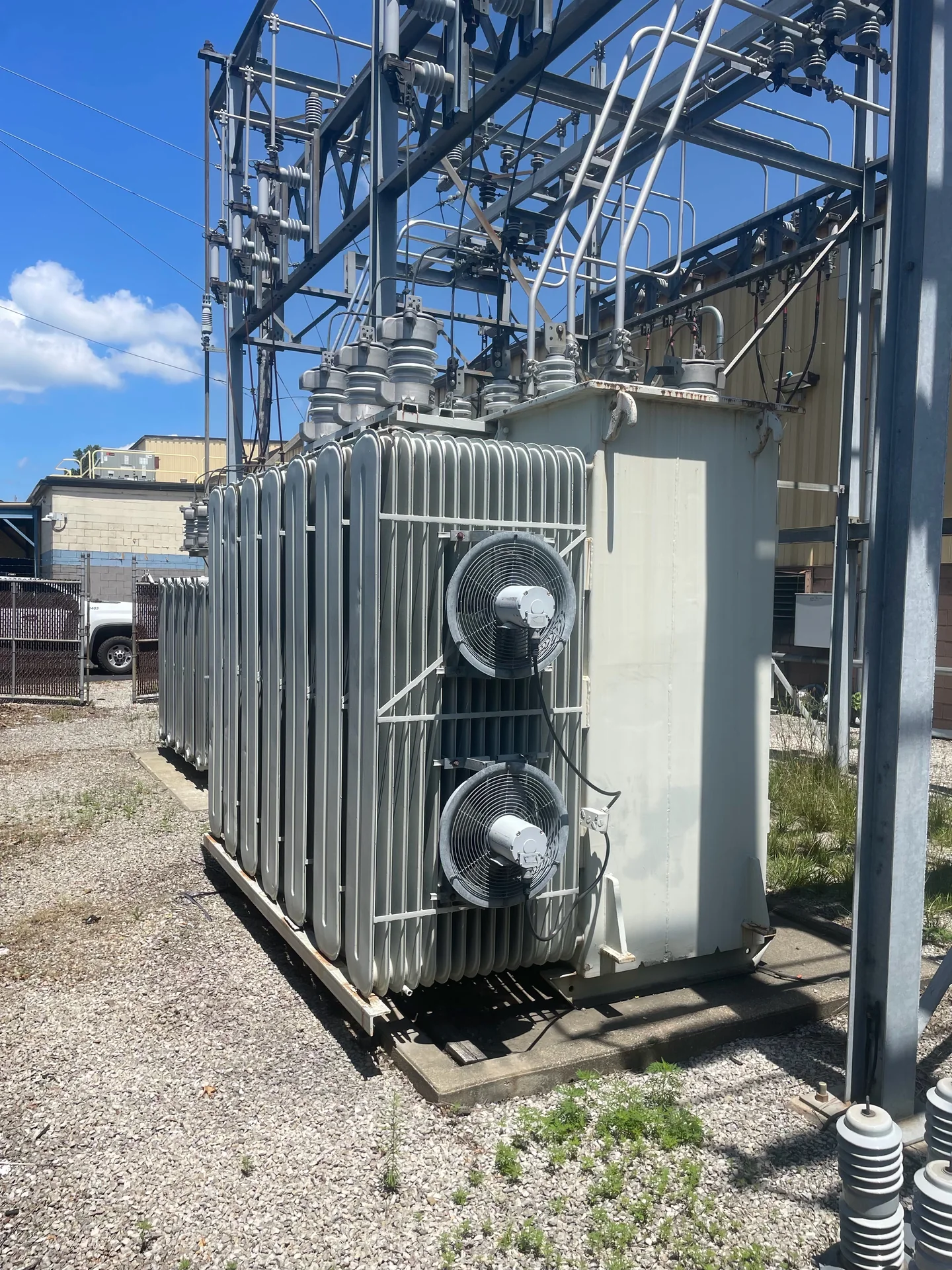
Take clear photographs from multiple angles showing the nameplate, bushings, lift points, cooling equipment, nearby obstructions, and any visible damage or corrosion. If available, gather test and service records, insulating-fluid tests, and maintenance history. Buyers use this documentation to assess value, required testing, and potential reuse versus recycling.
- Essential nameplate items: manufacturer, kVA/MVA, voltages, phase, serial number
- Photos: nameplate close-up, full-unit shots, connections, and surrounding area
- Records: recent test reports, service history, outage or failure notes
2. Identify site and access constraints
Document the transformer’s location on the property and how it sits relative to roads, gates, clearances, adjacent structures, and overhead lines. In Austin’s mixed urban and industrial areas, traffic patterns, narrow streets, and lot setbacks can affect lifting and truck access. Note whether the unit is indoors, on a pad, in a fenced yard, or within a substation compound that requires credentialing.
Include information on ground-bearing capacity and any floor loading limits if the unit is indoors or on elevated slabs. Buyers and transporters will want to know if permits, lane closures, or utility coordination will be required. Be honest about site constraints so removal options can be planned without surprises.
- Access details: nearest paved road, gate width, turning radius for trucks
- Vertical obstacles: overhead wires, canopies, tree limbs
- On-site constraints: fences, security protocols, indoor floor load limits
3. Prepare for rigging and loading conversations
When you talk with potential buyers or rigging contractors, provide the unit weight (if known), lift points visible on the tank or frame, and any special handling notes such as brittle components or attached piping. If the unit contains fluids, state whether they are drained and whether you have documentation of fluid tests—do not attempt to drain or move fluids yourself unless done by qualified personnel.
Ask riggers about their experience with similar units and about required equipment (cranes, forklifts, spreader bars), ground protection, and permit needs. Use the documentation and photos you collected to get realistic removal estimates and to determine whether additional site preparation (yarding, temporary decking, or access improvements) will be needed.
- Provide photos showing lift points and surrounding clearance
- Disclose whether fluid removal or containment will be required
- Request written removal scope and equipment list from riggers
4. Compare direct sale, auction, broker, and recycling options
A direct sale to a nationwide buyer can be efficient if your unit matches current demand and the buyer accepts off-site removal and freight arrangements. Direct buyers typically evaluate nameplate data, condition, and logistics before making an offer. If a unit is uncommon, aged, or requires extensive repair, offers may be limited.
Auctions or equipment brokers can reach a wide buyer base and may produce competitive bids, especially for collectible or in-demand units. Recycling or scrap may be a practical option for badly damaged, heavily contaminated, or non-ferrous-core units, but this route focuses on material value rather than reuse. Choose the path that aligns with timeline, paperwork capacity, and environmental or disposal requirements.
- Direct sale: faster negotiation if buyer demand exists for the unit
- Auction/broker: broader market exposure, potentially higher bids for niche units
- Recycling/scrap: suitable for damaged or non-repairable units; handles material disposal
5. Coordinate the transaction with a nationwide buyer
A nationwide buyer will typically request the documentation and photos you prepared, confirm site access, and arrange an inspection or third‑party appraisal when needed. Discuss timelines for inspection, acceptance, removal, and payment; understand that offers often depend on the inspector’s findings and final logistics costs. Clarify whether the buyer or seller arranges freight and who bears permit or crane costs.
Prepare clear proof of ownership and any customer or regulatory paperwork needed to transfer title. If the site is in a utility or secured substation, allow extra time for credentialing, lock removals, or utility coordination. Keep lines of communication open and document agreed responsibilities in writing.
- Confirm who arranges and pays for freight, rigging, and permits
- Provide proof of ownership and any required clearance documents
- Get a written removal schedule and terms before work begins
6. Practical checklist and next steps
Use a concise checklist to move the sale forward: capture nameplate photos, collect service/test records, map access routes, note lift points and weights, and decide which sale path you prefer. Reach out to potential buyers with complete documentation so their evaluations are based on facts rather than assumptions. Remember: availability and purchase fit depend on the actual unit and project details.
If you’re unsure about testing, environmental handling, or rigging needs, engage qualified professionals—electrical contractors, certified riggers, and environmental service companies—early in the process. Their input can clarify costs and timelines and help you present the unit in a way that improves buyer responses.
- Checklist: nameplate, serial, photos, test records, quantity, ownership proof
- Access map: route for trucks, gate widths, obstructions, crane clearances
- Decide: direct sale, auction, broker, or recycler; set realistic timeline
Service-area context
Planning a sale in Texas
This city guide is part of the broader Texas service-area directory. Review statewide pickup and documentation considerations before arranging an equipment review.
Explore the Texas transformer guideCommon questions
Practical answers before you call
One clear next step