Sell Electrical Transformers in Louisville — A Planning Guide
If you’re planning to sell a new, used, or surplus electrical transformer in the Louisville area, preparation reduces delays and helps buyers evaluate fit quickly. This guide explains what information buyers typically need, how to document the equipment, how to assess site access, and what to expect when comparing direct offers, auctions, or recycling. It also covers coordinating with a nationwide buyer and when to involve qualified contractors for disconnection, rigging, and transport. Availability and purchase fit always depend on the actual unit and project.
Evaluation starts with facts
Share the manufacturer, rating, voltage, phase, condition, quantity, and location before discussing value or pickup.
1. Document the unit: nameplate and condition first
Start by collecting the transformer’s nameplate data and any supporting records. Key nameplate items include manufacturer, kVA or MVA rating, primary and secondary voltages, phase (single or three-phase), frequency, vector group or design type, serial number, and cooling class. Buyers also look for age, design notes (e.g., auto, isolation, pad-mounted), and any modifications. Clear photos of the nameplate and full-unit images from multiple angles speed preliminary evaluation.
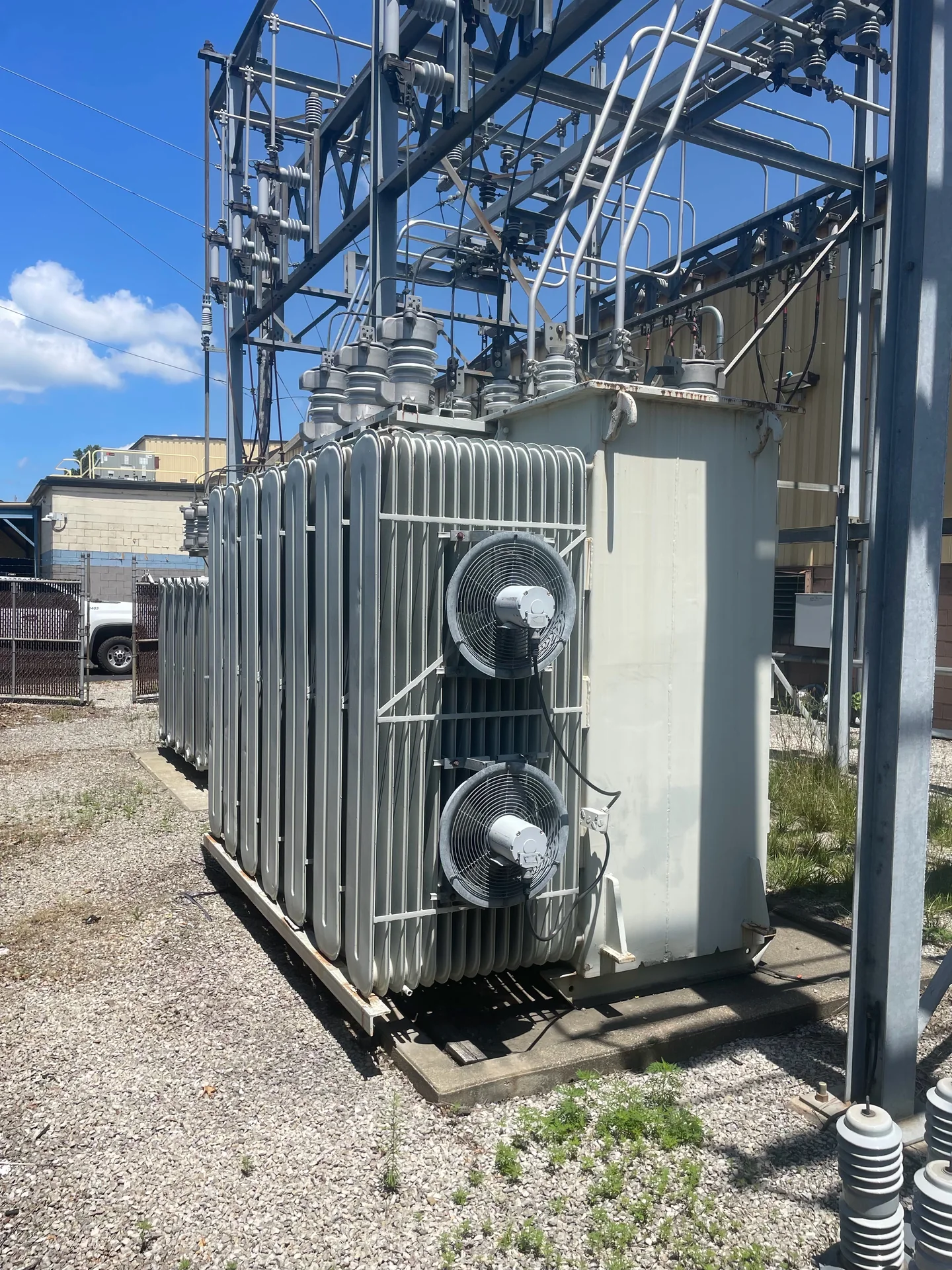
Beyond the nameplate, document condition and service history. Note visible oil leaks, corrosion, paint condition, gasket or bushing damage, and whether protective hardware (radiators, fans, bushings) is present. Provide any recent test or service records—oil tests, turns ratio tests, or maintenance logs—because documented tests materially affect a buyer’s interest and value assessment.
- Essential nameplate data: manufacturer, kVA/MVA, voltages, phase, frequency, serial number
- Photos: nameplate close-up, full unit, bushings/terminals, any damage
- Records: test reports, service history, outage documentation, ownership proof
2. Identify site-access constraints and restrictions
Location details matter. Describe where the transformer sits: rooftop, substation pad, indoor electrical room, pole-mounted, or in a yard. Note clearances, surrounding obstacles, pavement type, overhead lines, gates, and any weight-restricted surfaces. Urban sites in Louisville may have narrow streets, set-back requirements, or traffic control needs; industrial sites might offer large rigging areas. If the unit is in a fenced substation, confirm how access is granted and whether security or permit coordination is required.
Provide logistical photos showing the approach path from public roadway to the unit and measurements for gate openings, doorways, or man-lifts. Buyers and carriers use this information to estimate crane type, trailer configuration, and whether additional site work (temporary road protection or platform removal) will be needed.
- Location type: indoor/outdoor, pad/pole/rooftop, fenced area
- Access specifics: gate widths, overhead clearances, road approaches
- Site limitations: weight limits, traffic control, permitting or security
3. Prepare for rigging and loading conversations
When you speak with potential buyers or carriers, be ready to describe how the unit can be lifted and transported. Provide unit weight (if known), lifting points or eye bolts, presence of oil, and whether bushings, conservators, or radiators can be removed to reduce size or weight. If the unit contains transformer fluid, note the type and whether fluid removal or decontamination will be required prior to transport—these tasks must be done by qualified personnel following applicable regulations.
Buyers will discuss whether they expect the seller, a third-party rigger, or the buyer’s contractor to handle disconnection, lifting, and loading. Have estimates of available timeline windows for outage or access, and confirm who will provide traffic control, crane pads, or heavy-lift insurance certificates. This clarity shortens negotiation and helps select an appropriate hauling solution.
- Share weight and lifting points; indicate removable components
- State fluid status and whether oil must be drained or tested
- Clarify roles: who disconnects, rigs, and loads under qualified supervision
4. Compare sales paths: direct sale, auction, broker, or recycler
Decide which route best matches your timeline, risk tolerance, and documentation. Direct sale to a nationwide buyer can be efficient when the unit meets buyer demand and documentation is complete. Auctions or industrial equipment marketplaces work well when multiple buyers might compete, but they may require more lead time and buyer inspection. Brokers can help market specialized or high-value units to niche buyers, while licensed recyclers or scrap processors are options for badly damaged or non-repairable equipment.
Each path has trade-offs: direct offers can be quicker but depend on fit; auctions can expand exposure but include fees and variable results; recycling provides disposal certainty for non-salable units but requires environmental compliance and proper fluid handling. Be transparent about the unit’s condition and records to get accurate comparisons.
- Direct sale: faster if buyer demand and documentation align
- Auction/marketplace: wider exposure, variable outcomes and fees
- Broker: targeted marketing for specialty or large-quantity lots
- Recycler/scrap: appropriate for non-repairable or hazardous units
5. Coordinate a transaction with a nationwide buyer
If you choose to work with a buyer who operates nationally, prepare to coordinate across distance. Agree early on the information the buyer needs to make a firm offer, such as nameplate photos, condition notes, on-site access photos, and ownership documentation. Confirm whether the buyer will perform an inspection in person or accept a remote evaluation. Discuss timing for purchase authorization, payment terms, and required permits or insurance certificates for lifting and transport.
Make sure the contract or purchase agreement specifies responsibilities for disconnection, fluid handling, rigging, transport, and site restoration. Remember that transformer de-energization, conduit disconnection, and other electrical work must be performed by qualified personnel following applicable codes. Clear roles and contingency plans reduce the risk of last-minute delays.
- Provide complete documentation for remote offers: photos, records, ownership
- Clarify inspection method: remote review or on-site visit
- Document responsibilities for disconnection, rigging, transport, and permits
6. Final logistics, timeline, and alternatives
Establish a realistic timeline that accounts for shutdown windows, permit approvals, and carrier scheduling. Heavy equipment moves can require weeks of coordination, especially in dense urban or industrial areas, so build buffer time. If an immediate sale isn’t possible or buyer interest is low, consider staging alternatives: remarketing through a broker, listing on equipment marketplaces, or contacting licensed recyclers for compliant disposal. Each alternative may have different lead times and documentation needs.
Keep safety and compliance front of mind. Any disconnection, fluid draining, testing, or rigging should be handled by qualified contractors and comply with local and federal regulations. Availability and purchase fit will always depend on the actual unit, documentation, site constraints, and current market demand; be prepared to adapt your plan based on buyer feedback and inspection results.
- Plan for realistic scheduling: outages, permits, carrier availability
- Have contingency options: auction, broker, or recycler if direct sale isn’t viable
- Engage qualified contractors for disconnection, rigging, and environmental work
Service-area context
Planning a sale in Kentucky
This city guide is part of the broader Kentucky service-area directory. Review statewide pickup and documentation considerations before arranging an equipment review.
Explore the Kentucky transformer guideCommon questions
Practical answers before you call
One clear next step