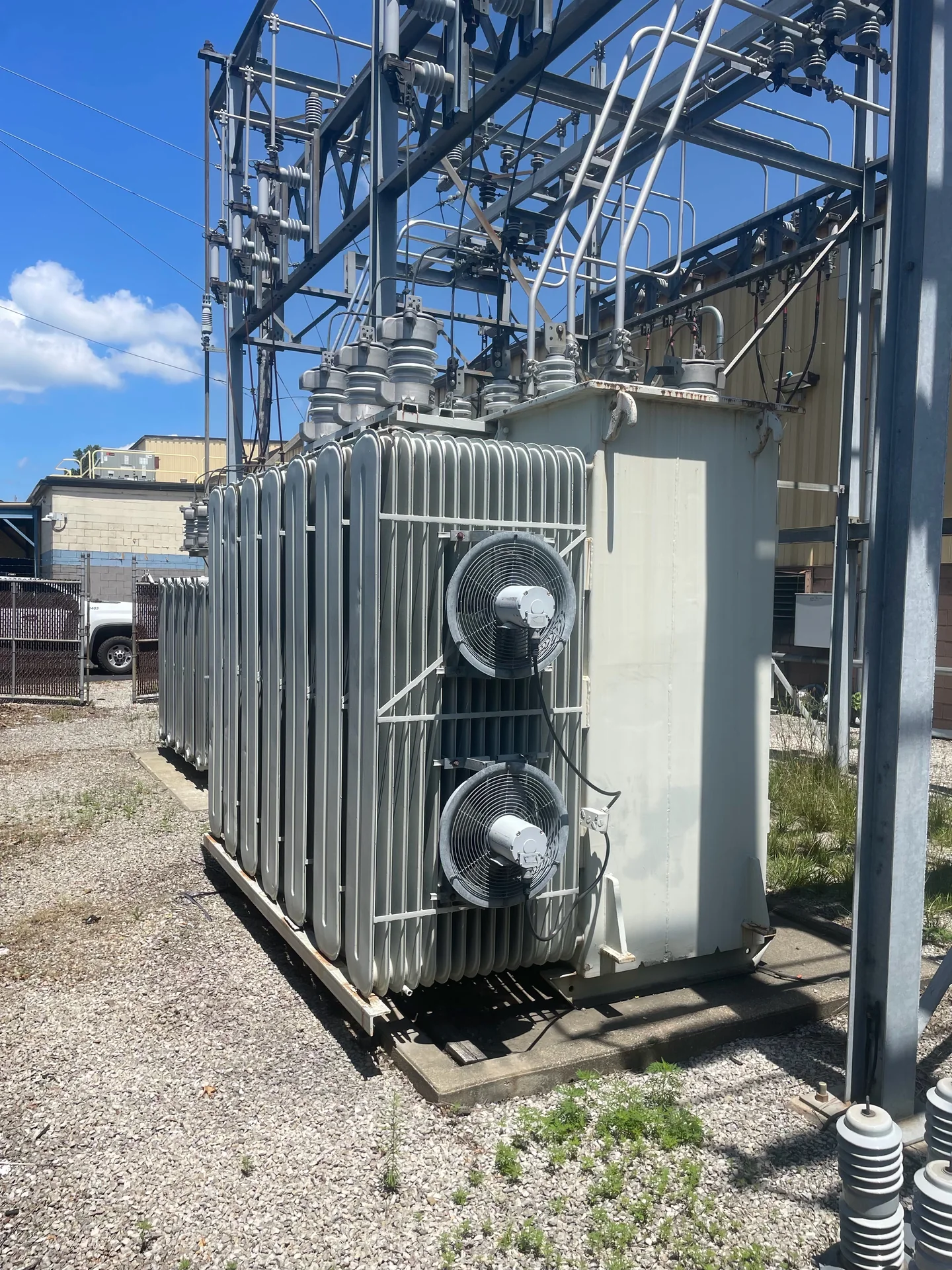
Sell Electrical Transformers in Florida — Planning Guide
This guide helps owners and project managers plan the sale of new, used, or surplus electrical transformers located anywhere in Florida. It explains what buyers typically need to see before issuing offers, which site and equipment factors matter, and the logistics that drive timing and price. The company operates as a nationwide buyer; this page focuses on planning and decision points rather than on specific schedules or guaranteed outcomes. Always involve qualified technical and rigging professionals for disconnection, testing, and handling.
Evaluation starts with facts
Share the manufacturer, rating, voltage, phase, condition, quantity, and location before discussing value or pickup.
Gather the essential documentation and nameplate data
Before contacting a buyer, compile clear documentation and the transformer’s nameplate information. Buyers base preliminary interest on verifiable technical data: manufacturer, kVA or MVA rating, primary and secondary voltages, phase (single or three-phase), frequency (50/60 Hz), vector group or design type (e.g., core, shell, pad-mounted), and any tapping arrangements. Photographs of the nameplate and overall unit accelerate evaluation and reduce back-and-forth questions.
Include chain-of-ownership and title information if available. Proof of ownership, purchase invoices, surplus declarations, and any lien releases help clear legal issues early. If ownership records are incomplete, state that upfront and describe what documentation you can provide; this affects how buyers evaluate risk and structure offers.
- Must-have: legible nameplate photos showing manufacturer, serial number, and kVA/MVA.
- Recommended: purchase invoice, service/test reports, and decommissioning records.
- Helpful: recent photos of oil levels, filler caps, bushings, and cooling equipment.
Assess condition and service history
Condition and testing history are central to valuation. Provide age, last service date, available test records (e.g., insulation resistance, DGA, turns ratio), and any known defects such as leaks, winding issues, or corrosion. Be honest about repairs, past failures, or if the unit has been out of service for extended periods; undisclosed problems commonly slow or cancel transactions.
If test records are not available, a buyer may request inspection or condition testing at the seller’s expense or may reduce the offer due to uncertainty. Do not attempt electrical testing, energization, or disconnection yourself unless you are a qualified electrical professional working under applicable standards and permits. State that such work will be performed by qualified parties if required.
- List: age, prior load history, and last service or preventive maintenance date.
- Provide: any dielectric or dissolved gas analysis (DGA) and recent test reports.
- Disclose: presence of PCBs, oil contamination, or other environmental concerns.
Confirm site access, location constraints, and safety
Location and access influence whether a buyer can remove a unit and what equipment is needed. Describe the installation environment: substation pad, fenced yard, rooftop, indoor electrical room, or congested industrial site. Include access road width, gate size, overhead obstructions, turning radius, and whether a crane, boom truck, or forklift will be required. Photographs or a short video showing approach routes are very helpful.
Clarify onsite restrictions such as security protocols, permitted working hours, and any special insurance or vendor onboarding requirements. Buyers arrange or coordinate rigging and lifting through qualified contractors; identifying these logistical constraints early helps produce accurate offers and realistic timelines.
- Provide: site photos of approach, pad, clearances, and nearby utilities.
- Note: preferred loading side, location of primary/secondary bushings, and any walkways.
- Confirm: onsite contractor requirements, permits, and confined-space or lockout needs.
Plan for rigging, loading, and responsible handling
Rigging and loading are specialized tasks that determine cost and feasibility. Buyers expect that disconnection, neutralization, de-energization, and any required cutting or lifting will be done by qualified personnel under applicable regulations. Describe whether the transformer can be loaded intact or must be partially disassembled. Provide weights, dimensions, and any special lifting points or trunnion information from the manufacturer's data.
If oil removal or containment is required, note that these are environmental tasks for licensed service providers. Do not assume a buyer will perform fluid handling unless explicitly agreed. Being explicit about rigging capacity limits, the availability of onsite lifting equipment, and whether a certified rigger is already engaged helps buyers scope and price removal.
- List: unit weight, external dimensions, and lifting points if known.
- State: whether fluid draining, containment, or filtration is required.
- Identify: any site-specific load limits (bridge, rooftop, or road weight restrictions).
Understand long-distance freight and packaging options
For sales that require long-distance transport, freight planning affects both timing and net value. Buyers consider quantity, how units will be secured on trailers or in containers, and whether special permits or escort vehicles are needed for oversize loads. Provide destination region or whether you are seeking quotes that include inland transport; this helps buyers compare local removal versus pickup-only transactions.
When multiple units are being sold, consolidation can lower per-unit freight costs. Conversely, single-unit long-haul shipments may attract higher logistics charges. Discuss whether you prefer a pickup-only sale (seller arranges transport) or a delivered sale (buyer arranges freight), and be clear about which party will contract freight and handle insurance for transit.
- Specify: single-unit or multiple-unit shipment and preferred freight responsibility.
- Mention: need for special permits, oversize routing, or blocking/protection for road transport.
- Note: remote staging or temporary storage needs prior to pickup or shipment.
Timing, demand, and realistic outcomes
Expected timelines vary with complexity. A straightforward, well-documented indoor unit with easy access and clear title can move faster than high-voltage outdoor equipment requiring environmental handling and road permits. Current buyer demand, unit specification, and condition influence how quickly a firm offer can be produced. Be prepared for inspections or remote video calls before a buyer issues a formal offer.
Not every transformer will receive a purchase offer. If a direct sale is not viable, alternatives include auction platforms, equipment brokers who specialize in resale, certified recycling or metal recovery, and qualified disposal solutions. Buyers will typically explain why an asset is not marketable and may suggest next steps based on condition, documentation, and logistics.
- Expect: evaluation steps—initial data review, site inspection, formal offer, and removal scheduling.
- Alternatives: auction, broker resale, recycler, or certified disposal when sale is not feasible.
Common questions
Practical answers before you call
Metropolitan service guides
Explore Florida city guides
Review the city guide closest to the equipment location for local planning details, site-access considerations, and a direct path back to this Florida service guide.
One clear next step